
Best Tortoise Runs UK (2026)
Tortoises need outdoor time in UK summers to absorb natural UVB and graze on varied plants. A secure run keeps them safe from cats, crows and escape — all serious risks during outdoor sessions. All picks rated out of 10.
| Rank | Run | Rating | Price | Best for |
|---|---|---|---|---|
| 1 | PawHut Mesh Roof Run | 9.1 | ~£55 | Most secure, juvenile tortoises |
| 2 | Easipet House & Run | 8.6 | ~£80 | Larger tortoises, all-day use |
| 3 | Aivituvin Enclosure | 8.0 | ~£65 | Solid sides, indoor/outdoor dual use |
#1PawHut Tortoise Enclosure with Mesh Roof
The mesh roof is the decisive feature. Cats can cause fatal injuries to tortoises in minutes and are a serious risk during any outdoor session — even in a garden you think is secure. Crows target small and juvenile tortoises from above. The PawHut’s mesh roof eliminates both threats while allowing maximum UVB penetration from direct sunlight. The wooden surround is high enough to prevent climbing out, and the open base allows natural grass grazing. Our top recommendation for all supervised outdoor tortoise sessions.
Pros: Mesh roof — cat and bird proof · Open base for grazing · Good UVB access
Cons: 91cm footprint — move periodically to fresh grass · No shade section
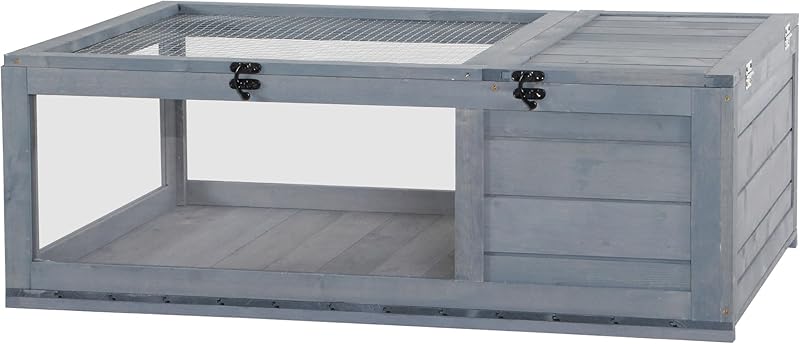
Dimensions: 91 × 60.5 × 32 cm
Check Price on Amazon
View on Amazon →
#2Easipet Tortoise House and Run
At 145cm long this is the right size for larger tortoises — adult Hermanns, Horsfields and Sulcata juveniles who need more foraging distance than the 91cm PawHut provides. The attached shelter section allows the tortoise to retreat from direct sun during the hottest part of the day without requiring you to intervene; tortoises will thermoregulate themselves if given the option. The most complete all-day outdoor setup in this category.
Pros: Large footprint for bigger tortoises · Shelter section for thermoregulation · Solid sides
Cons: No mesh roof — supervise during outdoor use · Heavier to reposition
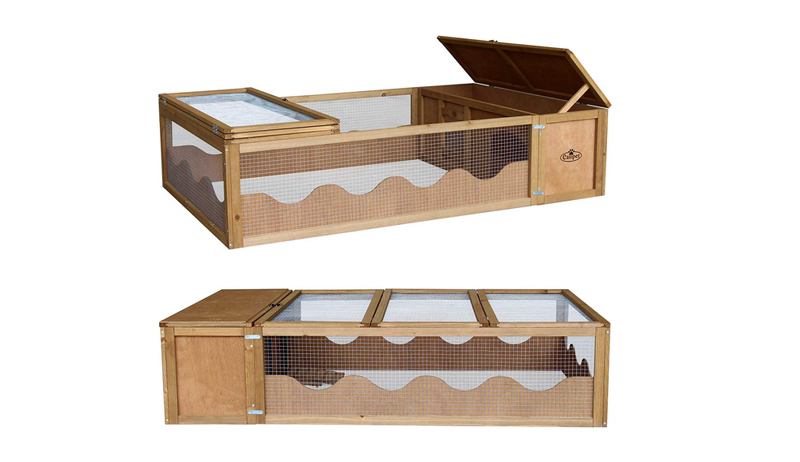
Dimensions: 145 × 91.5 × 35.5 cm
Check Price on Amazon
View on Amazon →
#3Aivituvin Tortoise Enclosure
Solid wooden sides rather than mesh sides are behaviourally preferable for tortoises. Mesh-sided enclosures allow tortoises to see through and they will pace the perimeter trying to reach what they can see — repetitive stress behaviour that is hard to stop. Solid sides prevent this. The Aivituvin also functions as a tortoise table indoors during winter, making it a dual-purpose enclosure for owners who bring their tortoise inside to hibernate or overwinter under a UV lamp.
Pros: Solid sides — reduces pacing behaviour · Works indoors as a tortoise table · Good build
Cons: No roof — supervise during outdoor sessions · Ensure sides are deep enough to prevent climbing
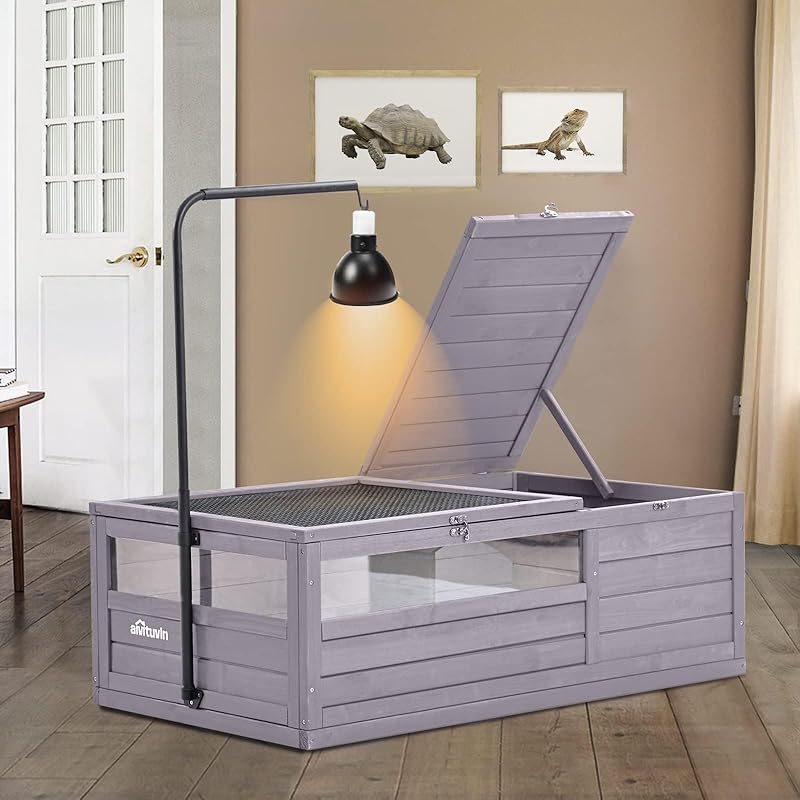
Which Tortoise Runs Are Right for Your Species?
The three most common UK pet tortoise species have different size and temperature needs:
- Horsfield’s (Russian) Tortoise: compact and active. Hardy down to around 10°C, so they have the longest outdoor season of the common UK species. A 91cm run is adequate for one Horsfield; pairs need more room. They are the most likely to try to escape, so check all joins carefully.
- Hermann’s Tortoise: medium-sized and the most commonly kept in the UK. Adults reach 15–28cm. A 120cm×60cm run is a workable minimum for one adult Hermann’s; the Easipet’s 145cm length is a better fit for a pair.
- Spur-thighed (Greek) Tortoise: similar in size and needs to Hermann’s. Require warm basking spots (30–35°C surface temperature) and shade to retreat to. The PawHut’s mesh roof allows full UVB penetration while keeping the tortoise secure during outdoor sessions.
For all three species, outdoor time should be limited to days when air temperature is above 15°C and the sun is strong enough to allow proper basking.
Outdoor Tortoise Safety in the UK
Temperature: Most common UK pet tortoise species (Horsfield, Hermann’s, Spur-thighed) need temperatures above 15°C to be active. On cooler UK summer days they will be sluggish — this is normal.
Predators: Cats, crows, magpies and foxes (at dawn/dusk) are all serious threats. Never leave a tortoise outdoors unattended in an open run without a mesh top.
Escape: Tortoises are surprisingly fast when motivated and strong enough to push through weak mesh. Check all joins and stake the enclosure on grass.
Shade: Always provide a shaded area within the enclosure. Tortoises will self-regulate but need the option to cool down.
How We Rate
Ratings out of 10.0, based on: security (top and sides), size, ease of use, predator protection and value.
Related: All Tortoise Runs · Best Part-Shaded Runs