
Best Guinea Pig Hutches UK (2026)
Guinea pigs need a minimum of 120 × 60 cm floor space for a pair — bigger is always better. They are prey animals, so the hutch must include a fully enclosed sleeping section they can retreat into without sightlines from the garden. All picks rated out of 10.
| Rank | Hutch | Rating | Price | Best for |
|---|---|---|---|---|
| 1 | Bunny Business Single Guinea Pig Hutch | 9.0 | ~£65 | One cavy, outdoor, secure sleeping |
| 2 | PawHut 4ft Wooden Hutch | 8.6 | ~£79 | Bonded outdoor pair |
| 3 | Indoor Hutch Cage | 8.0 | ~£55 | Indoor cavies, family homes |
| 4 | PawHut 2-Tier Guinea Pig House | 7.5 | ~£85 | Two cavies, small gardens |
#1Bunny Business Single Guinea Pig Hutch
The best single-cavy outdoor hutch on this list. The sleeping chamber is properly enclosed on all four sides — not just a darker corner of the sleeping area — which matters significantly for guinea pigs. As prey animals, they need to feel genuinely hidden to feel safe, and to sleep properly. The build quality is above average for the price, with solid hinges and weather-treated timber. Best for one cavy or a guinea pig paired with a neutered rabbit.
Pros: Genuinely enclosed sleeping chamber · Solid construction · Good predator security
Cons: Sized for one cavy · Pair with a run for exercise
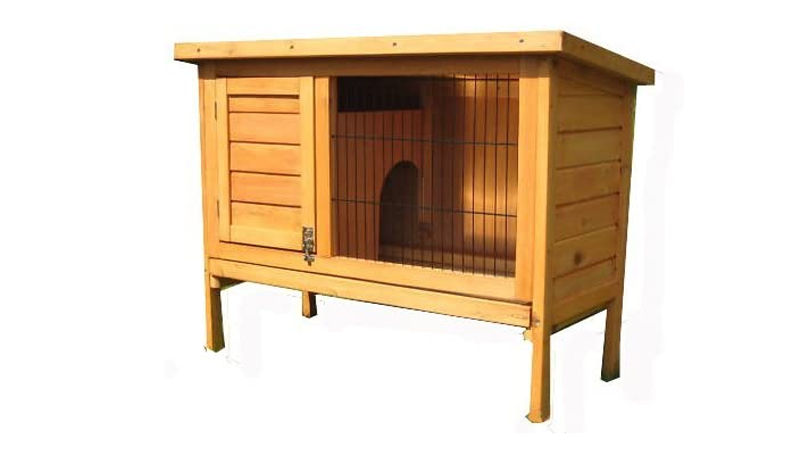
Dimensions: 90 × 45 × 70 cm
Check Price on Amazon
View on Amazon →
#2PawHut 4ft Wooden Guinea Pig Hutch
4ft is the length we actually recommend for a bonded pair of guinea pigs kept long-term. The 123cm floor length gives both cavies room to move around each other and retreat to separate ends when they need space. Honest timber, simple working latches, sloped asphalt roof that handles UK rain reliably, and a price point that leaves money for a decent run alongside. The outdoor pair pick we would recommend without qualification.
Pros: 4ft length for a pair · Asphalt roof · Good price-quality ratio
Cons: No integrated run · Pair with a separate run for exercise
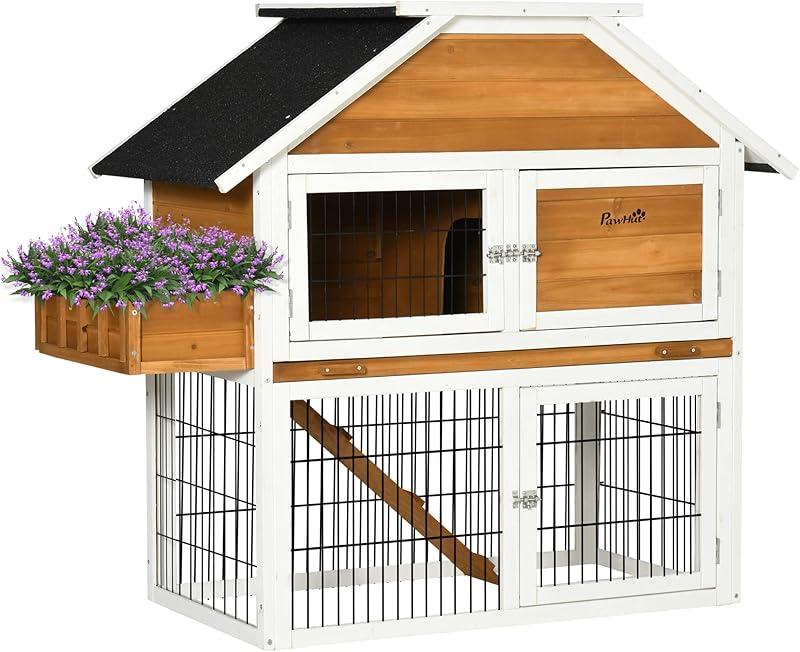
Dimensions: 123 × 54 × 76 cm
Check Price on Amazon
View on Amazon →
#3Guinea Pig Indoor Hutch Cage
The best indoor option on this list. The solid base keeps substrate inside the cage rather than on your floor; the wire upper section gives the ventilation guinea pigs need indoors; and the footprint is designed to sit alongside living-room furniture without looking out of place. Important caveat: indoor cavies need free-roam time outside the cage every day. This is a home base, not a complete habitat. Add daily floor-time in a secured room.
Pros: Clean indoor design · Solid substrate base · Good ventilation
Cons: Must pair with daily floor-time · Indoor use only
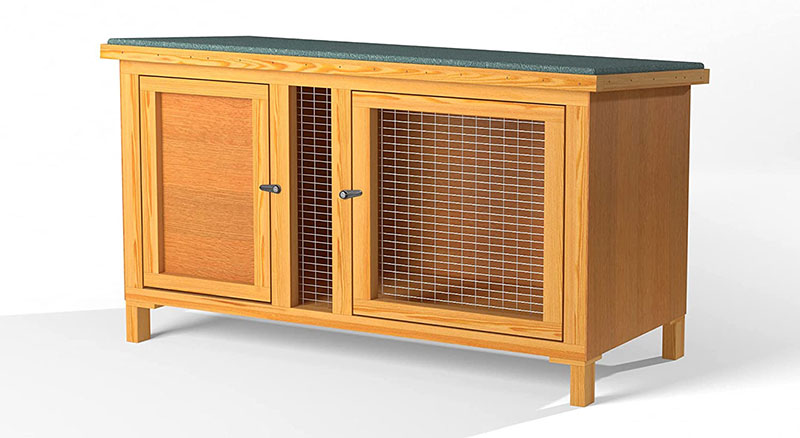
Dimensions: 95 × 44.5 × 44.5 cm
Check Price on Amazon
View on Amazon →
#4PawHut 2-Tier Guinea Pig & Ferret House
Two storeys for guinea pigs is unusual — their legs are not built for steep ramps — but the PawHut’s ramp angle is gentle enough that most cavies do use it, giving them two levels of living space without doubling the garden footprint. Before committing: test your guinea pigs on a ramp. Some take to it immediately; others never will. For those who do, this delivers genuinely good space for a pair in a small garden. Not for elderly guinea pigs.
Pros: Doubles floor space · Compact footprint · Gentle ramp angle
Cons: Some guinea pigs will not use ramps · Not for elderly or mobility-limited cavies
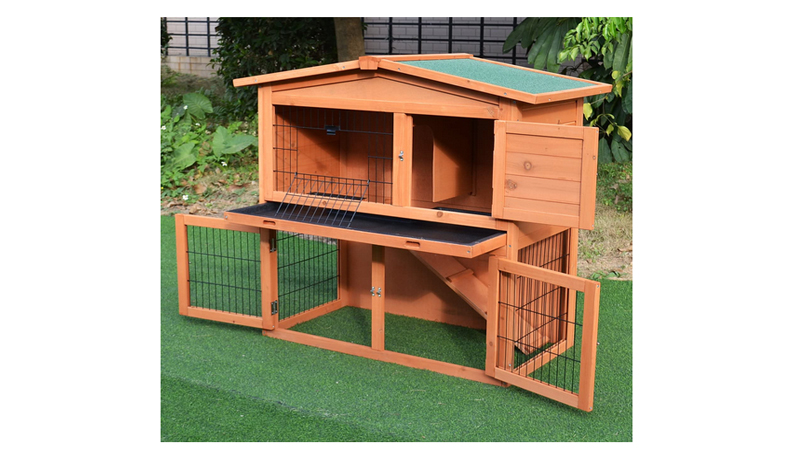
Dimensions: 100.5 × 55 × 101 cm
Check Price on Amazon
View on Amazon →
Minimum Size for Guinea Pigs
The RSPCA recommends at least 120 × 60 cm for a pair of guinea pigs. In practice the more space you can give, the better — guinea pigs that have enough room to run short sprints are visibly healthier and less anxious than those in cramped hutches. A hutch should always be paired with a separate run for daytime exercise. See our guinea pig runs guide.
How We Rate
Ratings are out of 10.0, based on: floor space against RSPCA minimums, quality of the sleeping chamber, ventilation, ease of cleaning, and overall build quality and value. No hutch scores above 9.5 — there is always a compromise.
Related: All Guinea Pig Hutches · Guinea Pig Runs · Guinea Pig Hut & Run Combos